
CyberWiseCon Europe 2027
— CYBERWISECON EUROPE 2027 SCHEDULE AND SPEAKERS —
| Day | Start | End | Conference | Format | Stage | Speaker | Session | Position | Company | Country | Keywords | Session description | |||||
|---|---|---|---|---|---|---|---|---|---|---|---|---|---|---|---|---|---|
| TBA | TBA | DevDays | Talk | Real2Sim: Can Robot Foundation Models Play Video Games? |  | Thomas Endres | Real2Sim: Can Robot Foundation Models Play Video Games? | Thomas Endres | Managing Partner | TNG Technology Consulting GmbH | Germany | Robotics, Robot Foundation Models, Vision Language Action Models (VLAs) | Vision Language Action Models (VLAs) promise to bring the ChatGPT moment to robotics. Thanks to their strong foundational knowledge, they can solve complex problems end-to-end and be easily adapted to completely new tasks and embodiments. But how far can VLAs be pushed? Could they even play video games? In this talk, Thomas will show how a VLA can be trained to play arbitrary video games using imitation learning. He will draw first blood with an introduction to VLAs. Attendees will learn how they work, what kind of data they are designed to process, and how that makes NVIDIA's GR00T perfect for playing video games. After that, Thomas will briefly cover the concept of imitation learning, what kind of data is needed to train GR00T, and how it can be collected from games. Finally, he will tell the story of leveling up the model from total noob to global elite - one failure at a time - and share all the things learned along the way. To close the game, Thomas will challenge one member of the audience to beat GR00T live on stage in a 1v1. | Thomas Endres is a Managing Partner at TNG Technology Consulting in Munich. Besides his regular work for the company and managing customer relationships, he creates various prototypes, including real-time deepfakes, AI systems for generating presentations, and various robotics showcases. He works on applications in the fields of AI, robotics, AR/VR, and teleoperation. Furthermore, he is involved in open-source projects.Thomas studied computer science at the Technical University of Munich (TUM) and is a passionate software developer. As an Intel Software Innovator and Black Belt, he presents new technologies such as AI, AR/VR, and robotics worldwide. For his work, he has received awards including a JavaOne Rockstar Award and several Best Speaker Awards. | thomas-endres-real2sim-can | |||
| TBA | TBA | DevOps Pro | Talk | Connecting Logs, Metrics, and Traces with Grafana LGTM |  | Nedelcho Nikolov | Connecting Logs, Metrics, and Traces with Grafana LGTM | Nedelcho Nikolov | Team Lead | Enetpulse | Bulgaria | Grafana, Observability, Metrics, Logs | Observability often grows one tool at a time. Logs may live in Elasticsearch, metrics in Prometheus or InfluxDB, and traces may be missing completely. Each tool has its own query language, storage model, and dashboards. As a result, finding the cause of a slow request can take longer than it should. This talk explains how to connect logs, metrics, and traces with the Grafana LGTM stack: Loki, Grafana, Tempo, and Mimir. It also shows how OpenTelemetry and Grafana Alloy can collect and connect tObservability often grows one tool at a time. Logs may live in Elasticsearch, metrics in Prometheus or InfluxDB, and traces may be missing completely. Each tool has its own query language, storage model, and dashboards. As a result, finding the cause of a slow request can take longer than it should. This talk explains how to connect logs, metrics, and traces with the Grafana LGTM stack: Loki, Grafana, Tempo, and Mimir. It also shows how OpenTelemetry and Grafana Alloy can collect and connect telemetry data from applications. Ned will share lessons from building and running this stack in a production environment. The platform is self-hosted on AWS, runs in Docker, and is protected by Nginx. The talk will cover how the main parts fit together, how data moves through the system, and how to connect an alert to the related logs and trace. Attendees will leave with a practical view of the architecture, the main setup steps, and the tradeoffs to consider when building a self-hosted observability platform.lemety data from applications. Ndshare lessons from uilding and running this stack in a production nvironment.he pltform is sef-hosted on AWS, runs in Docer,an is protcted by Nginx. The talk will cover how the main part fit together, how data moves through the system, and how to onnect an alert to the elated logs and trace. Attendees wll leave with a raccal view of the architecture, the main setup steps, and the tradeoffs to csider when building a self-hosted observability platform. | Nedelcho Nikolov (Ned) is a senior PHP developer, team lead, and conference speaker with over 10 years of experience. He works with backend systems, AWS, DevOps, and software design. He also mentors developers and helps organize tech events in Bulgaria. | nedelcho-nikolov-connecting-logs | |||
| 2027-05-25 09:00 - 17:00 (GMT+2) | 2027-05-25 | 09:00 | 17:00 | DevOps Pro | Workshop | Many Tools, One Platform - Building a Golden Path |  | Thomas Schuetz | Many Tools, One Platform - Building a Golden Path | Thomas Schuetz | Cloud Native Trainer & Architect | Founder | TSC Labs | Austria | Platform Engineering, Kubernetes, Backstage, Gitops | What are the first steps to build a self-service Internal Developer Platform (IDP)? Building a platform is as much about strategy and organizational alignment as it is about technology.In this hands-on workshop, we will demystify the process of building a platform from the ground up.We’ll break the journey into three distinct phases:1. The Strategy ("Why?"): We’ll start with the fundamentals of Platform Engineering—defining our goals, understanding cognitive load, and identifying the platform-as-a-product mindset. 2. The Architecture ("What?"): We’ll dissect modern platform components, discuss finding the right abstraction level for developers, and map out how these pieces fit together structurally. 3. The Implementation ("How?"): We’ll get our hands dirty building a real Golden Path. We'll establish a lightweight GitOps workflow, model custom platform abstractions using KRO, and tie it all together with a Backstage software template, enabling developers to bootstrap new applications with a single click. You’ll walk away with a clear blueprint of how to design developer-centric interfaces and the practical, real-world skills to start building your organization's Golden Path.Prerequisites: Basic familiarity with Kubernetes concepts (pods, services, custom resources), Git, and YAML. Please bring a laptop with Docker and a local Kubernetes cluster (like kind or minikube) pre-installed and running, along with a modern web browser and terminal. | Thomas is a Cloud Native Trainer and Architect at TSC Labs, Tech Lead of CNCF TAG Infrastructure, and a CNCF Ambassador. He helps organizations embrace cloud-native practices by upskilling teams and designing platforms that elevate both developer and customer experiences. Passionate about engineering accessibility and community, Thomas actively contributes to open-source projects and supports the growth of the global cloud-native ecosystem. | thomas-schuetz-many-tools | |
| 2027-05-25 09:00 - 17:00 (GMT+2) | 2027-05-25 | 09:00 | 17:00 | DevDays | Workshop | Data Modeling and Schema Design Patterns for MongoDB |  | Stanimira Vlaeva | Data Modeling and Schema Design Patterns for MongoDB | Stanimira Vlaeva | Staff Developer Advocate | MongoDB | Bulgaria | Data Modeling,document,database,schema | Join us for a hands-on workshop on data modeling and schema design patterns for MongoDB. You’ll learn how to translate application requirements into an efficient document model by identifying entities, quantifying workloads and choosing when to embed or reference related data.Through practical exercises based on a library management application, you’ll design a schema, apply MongoDB’s schema validation and explore schema design patterns such as extended reference, computed and inheritance. We’ll also examine common anti-patterns, including unbounded arrays and bloated documents. Finally, we’ll discuss how to avoid them to build performant, maintainable applications.By the end of the workshop, you’ll have a structured methodology for designing MongoDB data models and the confidence to identify and resolve schema design challenges in your own applications. You’ll also have the opportunity to earn MongoDB skill badges that you can add to your LinkedIn profile. | Stanimira Vlaeva is a Staff Developer Advocate at MongoDB and a Google Developer Expert for Google Cloud. She is passionate about explaining complex technical topics in an understandable way, live-coding and helping developers build with confidence. | stanimira-vlaeva-data-modeling | |
| 2027-05-25 09:00 - 17:00 (GMT+2) | 2027-05-25 | 09:00 | 17:00 | DevDays | Workshop | Building Schrödinger's App | 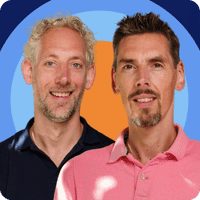 | Peter van Vliet | Bas Meeuwissen | Building Schrödinger's App | Peter van Vliet | Bas Meeuwissen | Co-Founder and Software Architect | Masking Technology | The Netherlands | Architecture,scalability,adaptivity,typescript | Can an application be a monolith and microservices at the same time? Spoiler alert: yes!In this hands-on workshop, participants will build a full-stack application with TypeScript, React, and Jitar that blurs the traditional boundaries between monolithic and distributed architectures. Much like Schrödinger's famous thought experiment, the application's deployment model remains undecided during development. Only at deployment time is it determined whether the application runs as a monolith, a set of microservices, or something in between.The workshop begins with a simple full-stack monolith, with the frontend and backend deployed independently. From there, participants will evolve the system into a modular monolith composed of multiple applications and explore how the same codebase can be deployed either as a monolith or as a collection of microservices.Along the way, participants will learn practical techniques for designing scalable systems, defining logical and physical boundaries, creating distributable components, and applying practical deployment strategies.This workshop is ideal for full-stack developers, backend developers, and software architects.Before the workshop begins, participants should have Git, Node.js (version 24 or later), and a code editor installed on their laptop. | Peter van Vliet started his career as a full-stack software developer in 2002 and has since progressed to a lead architect role. Over the course of these 20+ years, he has fulfilled many roles in various industries and gained extensive experience with a wide range of technologies such as Java, C#, JavaScript, and others. Nowadays, he leverages his expertise to assist companies, write articles, and speak at conferences.Bas has a wide range of interests, and this diversity is reflected in his professional career. In 2010, his journey began as a low-code developer, while also maintaining proficiency in traditional programming. This dual-track approach has provided him with a comprehensive understanding of software development. Throughout his career, Bas has achieved the role of a lead software architect. Today, he leverages his extensive experience to assist companies and write about the intersection of low-code and high-code development. | peter-van-vliet-bas-meeuwissen-building-schrdingers | |
| 2027-05-25 09:00 - 17:00 (GMT+2) | 2027-05-25 | 09:00 | 17:00 | CyberWiseCon | Workshop | Automation with GitHub Actions and Azure DevOps |  | Leo Visser | Automation with GitHub Actions and Azure DevOps | Leo Visser | Consultant AI & Cloud | BBTG | Build Beyond Technology Group | Netherlands | Azure DevOps, GitHub, Pipelines, Actions, Agentic Workflows, Ci/Cd | Automation for free! That sounds like a dream, but it can be a reality! Both GitHub and Azure DevOps allow for a limited amount of free pipeline runs on their platform.In this full-day workshop, you will learn how to set up pipelines in Azure DevOps and GitHub Actions to run code, automate tasks, and build real-world automation solutions. We'll start with the fundamentals and gradually build towards advanced CI/CD automations.During this workshop, several different aspects will be covered, including:- Building modular systems so you don’t have to duplicate code - Working with secrets, certificates, and credentials while keeping them secure - Creating flexible pipelines and actions using parameters and conditional logic - Creating reports and files in your automation and storing them correctly - Using approval gates to introduce governance and control into automated processes - Building loops that can dynamically process varying numbers of items - Designing agentic workflows where automation can make decisions, coordinate tasks, and react to changing conditionsThroughout the day, you'll build automation step by step, learning not only how the individual components work but also how to combine them into powerful solutions. By the end of the workshop, you'll understand how to create everything from simple scheduled automations to advanced workflows that can coordinate multiple tasks, systems, and decision points.Some basic knowledge of PowerShell will come in handy, as we’ll use it to write scripts during the workshop, but everything will be explained along the way. The workshop is open to all experience levels. Having access to an Azure subscription (a trial subscription is perfectly fine) is recommended for the workshop!So whether you want to build a CI/CD pipeline, automate recurring tasks, govern deployment processes, or explore intelligent automation, join this workshop to discover what you can achieve with GitHub Actions and Azure DevOps Pipelines. | Active in the IT industry since 2012, Leo Visser is a Subject Matter Expert for Azure and AI Foundry at BBTG. He advises organizations on AI, automation, and cloud architecture, combining tools like PowerShell, Power Platform, Azure Logic Apps, and native Azure services. His work strongly focuses on security, sustainability, and long-term value. Leo is a Microsoft PowerShell MVP. | leo-visser-automation-with | |
| TBA | TBA | CyberWiseCon | Talk | What userland utilities won't tell you: uncovering hidden process state in `procfs` |  | Aivars Kalvans | What userland utilities won't tell you: uncovering hidden process state in `procfs` | Aivars Kalvans | Developer | PandaDoc | Latvia | Procfs, Containers, Capabilities, Enumeration | Standard userland utilities like This talk strips away user-space abstractions to demonstrate how to audit, debug, and verify running workloads by querying raw kernel structures directly inside | Aivars Kalvāns is a FinTech developer with more than 18 years of experience developing and architecting payment card software for acquiring and issuing, as well as solutions for accounting and utility payments through mobile phones, ATMs, and POS terminals. At the moment, he is a contractor exploring foreign exchange (FX), SWIFT, SEPA, ledgers, and other areas of the FinTech landscape.Outside of work, Aivars trains in Brazilian Jiu-Jitsu (BJJ) with Team Jelgava and participates as a member of Latvia’s Linux team in Locked Shields. | aivars-kalvans-what-userland | |||
| TBA | TBA | DevDays | Talk | How to Present Your Software Project to Your Mother? |  | Alper Ebicoglu | How to Present Your Software Project to Your Mother? | Alper Ebicoglu | Co-Founder | Volosoft | Turkey | Communication, Storytelling, Developer Skills | You’ve spent months building your project. You know the architecture, the patterns, the libraries, and every painful bug along the way. Then some non-technical guy asks a simple question: “So, what does it do?” Suddenly, explaining the project is harder than building it. In this session, Alper will look at how developers can explain technical work to people who don’t share their context, whether that’s a customer, a manager, their mother, or someone they meet at a conference. He will explore how to decide what the audience actually needs to know and turn complicated technical details into stories people can follow and remember. He has been giving conference talks and has presented his .NET project to audiences in more than 100 countries. He has learned that the same technical story needs to be told differently depending on who’s listening. He’ll share practical examples and lessons learned along the way. If developers can make their mothers understand why their projects matter, explaining them to the next audience might become a lot easier. | Alper is a software architect and co-founder of Volosoft. He began his software career in the early 2000s. Alper is one of the creators and core maintainers of the popular open-source ABP Framework (abp.io) and ASP.NET Zero (aspnetzero.com). He has authored and contributed to numerous technical articles and is a regular speaker at international software conferences. This will be Alper’s third talk at DevDays Europe. | alper-ebicoglu-how-to | |||
| TBA | TBA | DevDays | Talk | The Burrito Bot: AI-Powered Search in SQL Server 2025 |  | Andrew Pruski | The Burrito Bot: AI-Powered Search in SQL Server 2025 | Andrew Pruski | Principal Field Solutions Architect | Everpure | Ireland | Semantic Similarity Search, Vector Data, SQL Server | SQL Server 2025 introduces native vector support, enabling AI-powered semantic search directly inside the database engine. But what does that mean for data professionals, and how does it actually work? In this session, Andrew will break down the fundamentals of vector search and show exactly how SQL Server stores, indexes, and queries embeddings to deliver semantic search capabilities. He will cover:
Andrew will then bring it all together by building an intelligent, AI-driven application to provide burrito restaurant recommendations in Ireland. This session is ideal for data professionals and developers who want a practical understanding of SQL Server’s vector capabilities, with real demos and a real use case. | Andrew is a Microsoft Data Platform MVP and Docker Captain who helps organise Data Ceili and EightKB.He is interested in all things database-, Kubernetes-, and container-related and shares his passion for these topics by speaking at events across the world.Originally from Wales, Andrew is now based in Ireland and continues exploring the country. | andrew-pruski-the-burrito | |||
| TBA | TBA | DevDays | Talk | Software Is Cheap. Judgment Is Not. |  | Daniil Aizenshtat | Software Is Cheap. Judgment Is Not. | Daniil Aizenshtat | Head of Strategy and Execution | EXANTE | Austria | AI, Engineering Leadership, Platform Engineering, Team Design | AI is making code abundant, but most companies still organise software delivery around scarce implementation capacity. This session follows a regulated-enterprise case in which more than 300 employees built over 1,900 internal applications and more than 200 use one on a typical day. The speaker shows what changed when selected domain experts stopped handing requirements through a delivery chain and began owning the problem, the working system and the outcome end to end. The session covers a practical handoff audit, signals for identifying potential full-stack operators, the paved technical path that supports direct authorship, and failures hidden by adoption metrics. Attendees leave with a concrete framework for deciding which handoffs add distinct judgment, which merely transfer information, and how engineering leadership changes when implementation is no longer the scarce resource. | Daniil Aizenshtat is Head of Strategy and Execution at EXANTE, a regulated global fintech. He leads company-wide strategy execution and has helped create an operating model in which domain experts build and own internal software end to end. In an approximately 800-person company, more than 300 employees have built over 1,900 internal applications, with more than 200 using one on a typical day. His work focuses on AI-native organisations, platform engineering, end-to-end accountability, and how judgment becomes the scarce capability when software implementation becomes abundant. | daniil-aizenshtat-software-is | |||
| TBA | TBA | CyberWiseCon | Talk | From Passive Defence to Adversarial Readiness |  | Dionysis Karamitopoulos | From Passive Defence to Adversarial Readiness | Dionysis Karamitopoulos | GRC Security Architect | Independent | Greece | Artificial Intelligence, Threat Intelligence, Security Governance, Adversarial Readiness | Cybersecurity programmes often rely on periodic risk assessments, control reviews, and incident-driven improvements, while adversaries continuously adapt their techniques, infrastructure, and decision-making. In this session, Dionysis Karamitopoulos introduces Continuous Adversarial Readiness, a governance-led security operating model that connects threat intelligence, controlled adversarial emulation, AI-assisted analysis, and continuous validation of defensive controls. The session explores how current threat intelligence can trigger targeted security validation, how AI can support analysis and prioritisation, and how the resulting evidence can feed back into security architecture and risk decisions. It also addresses a critical question as security technology becomes increasingly autonomous: where should automation stop, and where should human decision-making remain mandatory? Rather than proposing autonomous retaliation or “hack back” approaches, the model focuses entirely on defensive readiness. The objective is to continuously understand how relevant adversaries may approach an organisation, test whether existing controls remain effective, and adapt security decisions before weaknesses become incidents. Attendees will leave with a practical framework for connecting adversarial thinking, AI-assisted security, continuous control validation, and governance within an enterprise security programme. | Dionysis Karamitopoulos is a GRC Security Architect focused on cybersecurity governance, risk management, security architecture, identity and access management, regulatory compliance, and operational resilience. His work focuses on translating governance requirements into practical security controls, measurable risk decisions, and sustainable security operating models.His professional interests include AI governance, continuous assurance, adversarial readiness, third-party risk, and the integration of GRC with security operations. He is particularly interested in helping organisations move beyond periodic compliance towards continuous, evidence-driven security governance. | dionysis-karamitopoulos-from-passive | |||
| TBA | TBA | DevOps Pro | Talk | How To Autoscale Inference of Open-Source LLMs on Kubernetes |  | Federico Fregosi | How To Autoscale Inference of Open-Source LLMs on Kubernetes | Federico Fregosi | Staff Software Engineer - SRE | Wise | UK | Kubernetes, AI, LLMs, Inference | Autoscaling model inference for traditional ML/AI workloads is a relatively well-understood problem; these workloads are typically scaled horizontally, adding extra containers under increased load. But what do you do when you have millions of requests and larger models that span multiple machines and GPUs, requiring significant workload coordination? In this talk, Federico will take the perspective of an MLOps team tasked with reducing the AI vendor spending of a large enterprise, deploying increasingly large open-source language models on Kubernetes. He will identify a series of practical inference and system architecture best practices that teams can follow to autoscale model serving in their clusters. Furthermore, Federico will take a deep dive into components of the open-source ecosystem that teams can deploy to optimize the utilization of their compute (GPU) resources and increase the number of tokens per second (TPS) served. Talk Structure
Conclusion | Federico is an experienced engineering leader with a strong interest in distributed, highly scalable, and cloud-based systems.He has worked for years in engineering leadership roles, focusing on cloud-native architecture and the delivery of large-scale projects across the three major public cloud providers: AWS, Azure, and GCP.He is a regular speaker at conferences and meetups.Federico holds an MSc in Software Engineering from City, University of London. | federico-fregosi-how-to | |||
| TBA | TBA | DevOps Pro | Talk | Sovereign by Design: The Hidden Egress Cost of Leaving the Hyperscalers |  | Hari Rangarajan | Sovereign by Design: The Hidden Egress Cost of Leaving the Hyperscalers | Hari Rangarajan | Developer Advocate | Solace | Netherlands | EU Soverignity, EDA, Architecture, | The Sovereignty Imperative Two factors are driving this: regulation and geopolitics. GDPR, NIS2, DORA, and the EU Data Act have generated €7.1 billion in cumulative fines. And in July 2025, Microsoft told the French Senate under oath that it could not guarantee European data would stay out of US hands under the CLOUD Act. The EU's Cloud and AI Development Act, proposed in June 2026, adds four assurance levels. At the top two, which cover sensitive public-sector and critical-infrastructure workloads, US-owned hyperscalers simply don't qualify. They still run more than 70% of the European market, but 61% of Western European CIOs now say geopolitics is pushing them toward local providers. The Egress Problem Nobody Budgets For What often gets missed is what happens once an organization is running across two clouds: moving data between them is expensive, and it's expensive on purpose. Hyperscaler egress costs 5–10× what European providers charge: $0.05–$0.09/GB at volume, up to $0.12/GB on GCP's Premium tier, compared with rates that can be as much as 90% lower from EU providers. Hopsworks cut its cloud bill by 62% after moving from AWS to OVHcloud, most of it due to free egress. The EU Data Act kills switching fees in January 2027, but day-to-day operational egress isn't covered. In a dual-cloud setup, enterprises pay it every time data crosses the line. Solace as the Sovereign Data Backbone A few things that follow from that:
In the session, Hari will cover:
| Hari Rangarajan is a dynamic and creative professional with a passion for delivering innovative solutions in the world of software development. With a strong grasp of both technical and business perspectives, he thrives on challenges that stretch boundaries and drive growth.His core expertise lies in software engineering, with a focus on Java, microservices, and event-driven architecture (EDA). DevOps and Agile methodologies are not just part of his toolkit—they define his collaborative and people-centric approach to building technology.Hari’s journey as a Developer Advocate began with an authentic enthusiasm for sharing knowledge with fellow developers. Backed by a solid foundation in programming languages, frameworks, and tools, he excels at translating complex concepts into accessible learning through workshops, webinars, and hands-on content.He is deeply engaged with APIs, supports open-source initiatives, and enjoys organizing hackathons that spark creative problem-solving. His primary mission is to empower developers to think outside the box and build impactful solutions for real-world challenges.Outside of his professional work, Hari is passionate about the intersection of programming and sustainability. He advocates for mindful technology choices, encouraging the industry to consider its environmental impact and adopt greener practices as part of a sustainable future. | hari-rangarajan-sovereign-by | |||
| TBA | TBA | DevDays | Talk | What If Our Computers Were Ternary? |  | Horacio Gonzalez | What If Our Computers Were Ternary? | Horacio Gonzalez | VP DevRel | Clever Cloud | France | Computer Architecture, Alternative Computing, Balanced Ternary, Setun | What if our computers hadn't been binary? We take bits, zeros, and ones for granted, as if binary computing were the only possible way to build a computer. But in 1958, Soviet researchers at Moscow State University built Setun, a real computer based on balanced ternary: −1, 0, and +1. It wasn't an experiment on paper: Setun was produced, programmed, and used for years. In this talk, Horacio will explore what happens when a bit becomes a trit. How do you represent positive and negative numbers? How does arithmetic work? What do memory, instructions, registers, and conditional branches look like? He will dissect Setun's surprisingly elegant architecture and go all the way to building an emulator capable of running its instructions. Along the way, he will explore why base 3 has some fascinating mathematical properties, including the radix economy argument, and why, despite them, binary ultimately became dominant. But ternary computing never completely disappeared. Three-state logic lives on in TCAMs used in networking, ternary weight quantization is behind current research into 1.58-bit large language models (LLMs), and quantum computing is exploring qutrits alongside qubits. Setun may be a computer from 1958, but the ideas behind it are surprisingly alive today. Maybe binary wasn't the only possible future after all. | Horacio is a Spaniard lost in Brittany, a coder, speaker, dreamer, and all-around geek.Horacio is VP of Developer Relations (DevRel) at Clever Cloud. He is also the co-founder and leader of the FinistDevs and Rdv des Speakers communities.Horacio loves web development in general and everything around Web Components and web standards in particular, but he also loves to discuss Kubernetes, AI, and cloud technologies in general. | horacio-gonzalez-what-if | |||
| TBA | TBA | DevDays | Talk | State of Confusion: Data Ownership in Event-Driven Systems |  | Jeroen Rosenberg | State of Confusion: Data Ownership in Event-Driven Systems | Jeroen Rosenberg | Principal Consultant | FreshMinds | Netherlands | Event-Driven Architecture, Kafka, Data Ownership, Microservices | In event-driven systems, teams should not call another service's API, but instead consume its events and maintain local state. However, how much state should they store? If teams limit themselves to the state that is needed at the moment, they may find themselves rushing to deal with changes in requirements over a number of sprints. If they store all the state, then they end up being coupled to the other team's schema evolution. In every architecture review, this decision comes up, gets discussed in a Slack thread, and is regretted six months later. However, most teams lack a systematic approach to evaluating it. In this talk, Jeroen will walk attendees through the range of options, from making REST calls to full event replication. He will share examples of teams that kept too little data and teams that kept too much, and provide a practical decision-making framework based on four criteria: topic retention, schema stability, requirements clarity, and query patterns. Attendees will leave with a method they can use to assess this trade-off in their own systems. It won't be a set of rules, but rather a structured approach that recognizes there is no one-size-fits-all solution. What Jeroen will cover:
| Jeroen Rosenberg is a pragmatic software engineer and consultant based in Amsterdam, specializing in resilient systems, event-driven architectures, and data streaming at FreshMinds. With deep expertise in Java, Scala, and Kotlin, he helps teams modernize legacy systems and deliver robust products using Lean, Agile, and DevOps practices. Jeroen regularly conducts trainings in event-driven architecture and shares his experience at community events. Outside of work, he founded the Amsterdam.scala meetup group and still co-hosts and runs training courses. When not coding or writing, you can find him eating nachos at the beach with the love of his life. He’s a proud father of four kids and uses them as an excuse to play with Lego again. | jeroen-rosenberg-state-of | |||
| TBA | TBA | DevDays | Talk | Training Junior Devs in the Age of AI | Between Agents, Vibe, and Old Virtues |  | Kajetan Mischok | Training Junior Devs in the Age of AI | Between Agents, Vibe, and Old Virtues | Kajetan Mischok | CEO | Mischok GmbH | Germany | Agentic Software Engineering, Training Junior Engineers, Successful Software Projects | Coding is dead. But software engineering is more alive than ever. AI agents write code, vibe coding is becoming a reality, and yet, or precisely because of this, the demands on junior developers are rising. Because anyone who doesn't understand what AI produces can neither evaluate it nor take responsibility for it. This talk examines what deliberate junior training means in the age of AI. On the technical side, Kajetan will show why engineering fundamentals like TDD, CI/CD, and code reviews matter especially in the context of AI, as a yardstick for what AI delivers. On the personal side, he will focus on the virtues that no AI can take over: self-organization, taking ownership, and the ability to grow consciously within a team. The talk is aimed at anyone who trains juniors, mentors them, or is a junior developer and wants to understand what really counts in a world full of generated code. | Kajetan Mischok founded Mischok GmbH together with his brother Julius more than 10 years ago. As a software development partner, the company supports medium-sized businesses in implementing software projects. The focus is on transparent, integrity-based work and empowering customers to achieve digital success independently.At the moment, the team is working extensively on implementing integrated data platforms for its customers to enable them to use AI safely and effectively with their own company data. | kajetan-mischok-training-junior | |||
| TBA | TBA | CyberWiseCon | Talk | How to secure MCP architectures for enterprise production |  | Kalle Sirkesalo | How to secure MCP architectures for enterprise production | Kalle Sirkesalo | Field CTO | Eficode | Finland | Security, AI, MCP, Development, Orchestration | The industry has seen the Model Context Protocol (MCP) unlock incredible agentic workflows, but there is a hard truth Kalle often shares with clients: building the technical architecture is the easy part. The gap between “it works perfectly in my demo” and “the enterprise security team approves it for production” is where most MCP projects die. To get AI agents out of the sandbox and into production, teams need to design for security, governance, and enterprise reality from day one. In this pragmatic talk, Kalle will cover the security considerations and best practices he uses for enterprise MCP development. | Kalle is the Field CTO at Eficode. For over a decade, he's been guiding organizations through the sometimes stormy waters of modern software development. His focus lies in integrating AI-powered tools, implementing robust DevSecOps practices, and building stable Platform Engineering foundations.From scaling CI/CD in highly regulated industries to managing complex enterprise environments, he helps clients turn ambitious business goals into scalable, secure technology roadmaps. He's especially passionate about responsible AI adoption, ensuring transitions result in controlled efficiency rather than chaos. | kalle-sirkesalo-how-to | |||
| TBA | TBA | CyberWiseCon | Talk | No 0-day required, just target the AI coding assistant! |  | Leo Visser | No 0-day required, just target the AI coding assistant! | Leo Visser | Consultant AI & Cloud | BBTG | Build Beyond Technology Group | Netherlands | Security, GitHub Copilot, SupplyChain, VSCode, Dependencies | Do you trust your AI coding assistant? What if I told you that attackers have found ways to manipulate it and attack your code? With everyone now using AI coding assistants it’s time to look at the risks! During this talk I’ll show you several new techniques attackers are already using. This will range from hidden messages (ASCII smuggling) to abusing mistyping and characters that look the same (typosquatting). I will also show how an LLM can make mistakes when generating code (hallucinations). Did you know that a smart attacker can abuse this too? When you join this talk, you’ll learn how to spot hidden text in your instruction file and prompts. I will also explain how to set up a trusted dependency repository to prevent the malicious code from entering your production environment! | Active in the IT industry since 2012, Leo Visser is a Subject Matter Expert for Azure and AI Foundry at BBTG. He advises organizations on AI, automation, and cloud architecture, combining tools like PowerShell, Power Platform, Azure Logic Apps, and native Azure services. His work strongly focuses on security, sustainability, and long-term value. Leo is a Microsoft PowerShell MVP. | leo-visser-no-0-day | |||
| TBA | TBA | CyberWiseCon | Talk | Driving Sustainable Compliance: Harnessing Behavioral Science & Organizational Change in Privacy, AI, and Data Management |  | Liisa Thomas | Driving Sustainable Compliance: Harnessing Behavioral Science & Organizational Change in Privacy, AI, and Data Management | Liisa Thomas | Partner | Privacy, Cybersecurity & Compliance Lawyer | Author | Sheppard | USA | Regulatory Compliance, Behavioral Science, Change Management, Data Privacy, AI Governance, Data Governance | Liisa Thomas explores how behavioral science and organizational change principles are shaping the future of corporate compliance. In the presentation, she will share practical tools - like stakeholder mapping, influence planning, and cultural diagnostics - that privacy, AI and data professionals can use to integrate the power of organizational change into their compliance efforts. She will discuss how professionals can move past checklists and instead implement real, sustainable change in their organizations. | Liisa Thomas is a Chambers-ranked authority in privacy and cybersecurity law, serving as a go-to advisor for in-house counsel and C-suite executives at Fortune 500, multinational, and global companies. Based in Chicago and London, she brings a practical, business-focused, and cross-cultural approach to advising clients on privacy, cybersecurity, digital advertising and compliance law. She is co-leader of Sheppard Mullin's Privacy and Cybersecurity team.Liisa is known for translating complex legal requirements - such as GDPR, CCPA, BIPA, TCPA, and cross-border data transfer issues - into actionable strategies that protect enterprise value and manage risk. Having lived both in the United States, as well as Europe and the Middle East, and with an advanced degree in organizational change, Liisa is highly skilled in both translating business needs and cultures across borders and coordinating efforts across continents. Clients value her help in their efforts to protect data, assure compliance with all applicable regulations, and advance business goals.A sought-after keynote speaker and panelist, Liisa presents at leading privacy, cybersecurity, and compliance conferences, as well as executive forums and legal seminars. She is recognized for delivering engaging, insightful presentations on emerging privacy regulations and best practices. Liisa is a trainer for the International Association of Privacy Professionals (IAPP), and an adjunct professor at Northwestern University Law School, where she helps train the next generation of privacy professionals.Liisa has authored two treatises with Westlaw (a division of Thomson Reuters), ""Thomas on Data Breach: A Practical Guide to Handling Worldwide Data Breach Notification"" and ""Thomas on Big Data: A Practical Guide to Global Privacy Laws,"" both recognized as no-nonsense roadmaps for in-house and legal practitioners. As the editor of the firm’s Eye on Privacy blog, Liisa works with her team to provide timely updates and practical guidance on global privacy, cybersecurity, digital advertising, compliance and regulatory developments. | liisa-thomas-driving-sustainable | |||
| TBA | TBA | DevOps Pro | Talk | Observability foundations - how to read the observability tools data |  | Michal Bojko | Observability foundations - how to read the observability tools data | Michal Bojko | Head of Engineering | Lufthansa Systems | Poland | SRE, Data Engineering, Software Engineering, Observability | Modern systems do not fail politely; they drift slowly toward a threshold, they spike without warning, they hide two different behaviors behind a single reassuring average, and they bury three real root causes underneath forty-seven simultaneous alerts. The observability engineer is the person who reads that mess and turns it into a decision, and this presentation exists to provide the foundations for doing so. As a result, attendees will be able to see a problem while it is still forming rather than after it has become an incident, because they will have the tools to find a latency peak early, forecast the moment a metric crosses its limit, and collapse an alert storm into a short and actionable list. That is the whole value in one sentence: an average tells attendees that a system is fine, and this presentation gives them the necessary tools to see the moment it stops being fine, and to see it first. | Michal has 15 years of experience in software engineering leadership roles and more than 10 years in technical IT roles.He has built and scaled engineering organizations across Europe, working with teams in the USA, UK, France, Germany, Spain, Estonia, and Poland.He teaches Data Engineering and Digital Transformation at the university level across Engineering and MBA programmes. His courses combine theory with hands-on simulations, interactive tasks, and instructor-assisted exercises.Michal runs two tech communities:Observability Tech Community: focused on platform engineering, monitoring, and modern software reliability.Critical Thinkers Academy: bringing together practitioners who apply critical thinking to technology and organizational challenges. | michal-bojko-observability-foundations | |||
| TBA | TBA | DevDays | Talk | The Hidden Cost of AI: Human Verification as Compute |  | Olga Shpuntenko | The Hidden Cost of AI: Human Verification as Compute | Olga Shpuntenko | Founder | Employee Rocks | Czech Republic | Human-in-the-Loop, AI Economics, AI Agents, Developer Productivity | AI costs are easy to see when they arrive as a license fee or an API bill. The time people spend checking AI output is much harder to spot. An agent may produce code or analysis in seconds, but someone still has to decide whether the result is correct, safe to use, and good enough to ship. Usually, that reviewer is a senior engineer, whose time is among the most expensive on the team. This talk looks at AI-assisted work as an end-to-end system and shows how to account for the human effort around the model. It also examines how much human verification the workflow needs, what that verification costs, and where it can be safely automated. | After more than 20 years of leading HR in high-growth technology companies, Olga Shpuntenko has shifted her focus to AI, DevX, and engineering effectiveness. An engineer by training and a People & AI executive, she works on AI-enabled workflows, engineering culture, and improving developer experience across distributed teams, and also develops her own AI products for HR. | olga-shpuntenko-the-hidden | |||
| TBA | TBA | DevOps Pro | Talk | The Fellowship of the Stack. How I built the AI powered Digital Sovereignty Assessment platform |  | Pawel Piwosz | The Fellowship of the Stack. How I built the AI powered Digital Sovereignty Assessment platform | Pawel Piwosz | Developer Advocate | UpCloud | Poland | AI Engineering, Sovereignty, DevOps | A quest, not a sprint. It began with a question: how sovereign is an organization, truly? And is there any way to know for sure? A Fellowship formed - tokens and vectors, not Hobbits and wizards - to carry the Assessment into the Fires of Production. The Shire of Requirements, where everyone nods at “just use an LLM” and nobody asks what happens when the context window runs out. The Mines of pgvector: dark, vast, treacherous. Many have fallen there. The Ridge of RAG, where one wrong step means hallucination on one side and retrieval irrelevance on the other. The Misty Mountains of Prompts, where Pawel learned that a prompt is not a question - it’s a contract. Beneath Docker Mountain lies the shelter: the full Docker AI toolset, running the stack locally. Then comes Production: the Land of Desolation. In this talk, Pawel invites attendees to join the Fellowship and discover the patterns that work. | Pawel is a Docker Captain, DevOps Institute Ambassador, and CD Foundation Ambassador. He is an engineer, leader, mentor, and speaker.He is a Developer Advocate at UpCloud, conference organizer, community builder, co-author of CI/CD Design Patterns, and co-host of the OhMyCloud! podcast. He has built a maturity-model framework for assessing organizations' digital sovereignty readiness against NIS2, DORA, and GDPR, and regularly speaks on the topic at conferences. | pawel-piwosz-the-fellowship | |||
| TBA | TBA | CyberWiseCon | Talk | Keys on the Wire, Not in the Agent |  | Radoslaw Maciaszek | Keys on the Wire, Not in the Agent | Radoslaw Maciaszek | Chief Architect | Connexity | Latvia | AI Agent Security, Prompt Injection, Credential Brokering, Secrets Management | Radek Maciaszek is a Chief Architect at Connexity, a Taboola company. Over two decades he's worked across data engineering, cloud, and security for companies such as Orange, OpenX and Moore Capital Management. He created and maintains keys-on-the-wire, an open-source tool for keeping credentials out of AI agents, and has spoken previously at ApacheCon and Open Source Summit. | radoslaw-maciaszek-keys-on | ||||
| TBA | TBA | DevDays | Talk | Managing Memory for AI Agents - Storage, Retrieval and Lifecycle |  | Stanimira Vlaeva | Managing Memory for AI Agents - Storage, Retrieval and Lifecycle | Stanimira Vlaeva | Staff Developer Advocate | MongoDB | Bulgaria | AI, Agents, Memory, Vector Databases, MongoDB | AI agents can reason, call tools, and perform complex tasks. However, when they start a new conversation, they behave as if they’ve never met the user. Give them too much history and they get distracted, expensive, and inconsistent. Give them too little and they forget user preferences or struggle with longer tasks. What is the right way to give an agent memory? A vector database can be added, but that alone is not enough to solve the problem. It is also necessary to decide what the agent should remember, when it should save something, and how it should find that information later. Oh, and don’t forget that old memories can become stale - they need to be changed or removed at the right time. Overall, building memory systems for AI agents is a data problem. This talk presents a practical way to think about the problem. The speaker will look at working, short-term, semantic, episodic, and procedural memory. Then, the talk will follow a memory through the system from creation to retrieval and eventual deletion. A short demo will compare exact, semantic, and hybrid retrieval and show how the agent behaves with and without the right context. | Stanimira Vlaeva is a Staff Developer Advocate at MongoDB and a Google Developer Expert for Google Cloud. She is passionate about explaining complex technical topics in an understandable way, live-coding and helping developers build with confidence. | stanimira-vlaeva-managing-memory | |||
| TBA | TBA | DevOps Pro | Talk | Authenticating APIs without Secrets: A Practical Guide to Workload Identities in Kubernetes |  | Thomas Schuetz | Authenticating APIs without Secrets: A Practical Guide to Workload Identities in Kubernetes | Thomas Schuetz | Cloud Native Trainer & Architect | Founder | TSC Labs | Austria | Security, Workload Identities, Keycloak, Secrets | Workload identities are a staple of modern cloud architecture. They are routinely used to authenticate to managed cloud services or fetch secrets from Vault. Yet, when it comes to securing communication between internal services, organizations often default back to static API keys and shared secrets. Managing these internal credentials is often messy, error-prone, and a massive security risk. There is a better way. In this talk, Thomas will explore how to leverage native Kubernetes features and open standards to eliminate static secrets entirely. He will break down the core mechanics behind OIDC token exchanges, Kubernetes Token Projection, and the SPIFFE/SPIRE ecosystem. Finally, Thomas will walk through a practical, real-world example: mapping Keycloak identities to Kubernetes service accounts. Attendees will leave with a clear blueprint for enabling seamless, secure, and credentialless service-to-service communication inside their own clusters. | Thomas is a Cloud Native Trainer and Architect at TSC Labs, Tech Lead of CNCF TAG Infrastructure, and a CNCF Ambassador. He helps organizations embrace cloud-native practices by upskilling teams and designing platforms that elevate both developer and customer experiences. Passionate about engineering accessibility and community, Thomas actively contributes to open-source projects and supports the growth of the global cloud-native ecosystem. | thomas-schuetz-authenticating-apis | |||
| TBA | TBA | CyberWiseCon | Talk | Your Support Tickets Queue Is an Attack Surface (and I Built the Bot That Proves It) | 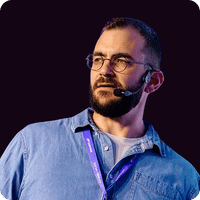 | Yedidya Schwartz | Your Support Tickets Queue Is an Attack Surface (and I Built the Bot That Proves It) | Yedidya Schwartz | CTO | Quicklizard | Israel | AI Agents, Production Security, Prompt Injection, Observability | Anyone who can open a support ticket can now talk to something that reads all of production. Yedidya built it: an autonomous AI agent living inside the production cluster, triggered by a ticket webhook, investigating 20 data sources (OpenSearch, RDS, BigQuery, logs, and Kubernetes) and replying directly to the ticket. Always read-only. He tried every open-source investigation agent he could find; none were safe enough to give production access. So he built his own — and the hard part was never the investigation; it was the defense. Attendees will walk away from the session with: the read-only-by-construction pattern for giving an agent production access, with no write tool available to call; the guardrail stack — a locked-down tool surface, network and RBAC limits, and prompt-injection defenses — that treats every ticket as untrusted input; how to stream an LLM's own traces into application performance monitoring (APM); the one NetworkPolicy that silently broke it; and an honest look at where it helped reduce the on-call burden — and where it answered with full confidence and was wrong. | Yedidya is leading the company's infrastructure, backend, frontend and data domains, designing and implementing complex architectures, bringing observability and performance to the top level. Driving the company's AI transformation, reshaping the structure and atmosphere of R&D to make AI a native part of how the team works. Certified AWS Solution Architect & AWS Community Builder with more than 15 years of experience in various software development positions, from team lead to Architect, and today as a CTO. International speaker, blogger, holds Philosophy B.A & M.A degrees, plays the piano and the guitar for relaxation, married and father of two. | yedidya-schwartz-your-support |
« Back